Masturbation is Healthy!

By Flowers

Masturbation is a natural and healthy sexual activity that provides a range of benefits, both physical and emotional. So in honor of the Myself! party this coming Sunday, February 19, here are some fun facts about the benefits of masturbation. 

1. Masturbation can help reduce stress and promote relaxation. When you masturbate, your body releases endorphins, which are feel-good chemicals that can help you feel more relaxed and calm.

2. Masturbation can help you sleep better. The relaxing sensation induced by endorphins can promote better, deeper sleep.

3. Masturbation can help improve sexual function. By exploring your own body and learning what feels good, you can improve your sexual function and become more comfortable with your own sexuality.

4. Masturbation can help relieve menstrual cramps. Orgasms stimulate blood flow to the pelvic area, which can help relieve menstrual cramps and other pelvic pain.

5. Masturbation can help boost your immune system. Studies have shown that regular sexual activity, including masturbation, can help increase levels of antibodies, which can help boost your immune system.

6. Masturbation can help improve mood and reduce depression. The release of endorphins during masturbation can help elevate your mood and reduce feelings of depression and anxiety. (Endorphins really are good for us!)

7. Masturbation can help improve prostate health. Regular ejaculation can help flush out bacteria and other harmful substances from the prostate gland, which can reduce the risk of prostate cancer and other prostate-related health issues.

Overall, masturbation is a safe and healthy sexual activity, which is why you should join us this Sunday for CSPC’s masturbation-friendly party! In the words of Elle Woods, “Endorphins make you happy!”

Get your tickets for Myself! here! Not yet a member? You can purchase new member tickets here! New member tickets include orientation the hour before the party, your first month’s membership dues, and your party entry immediately following orientation.

News from the Board: Considering Event Price Increase

The topic of a potential increase in event ticket prices was raised at the February Board meeting. This increase would be the first in over six years, and the decision is not an easy one. While our costs for venue rental, laundry, safer sex supplies, event refreshments, and accessibility items have all increased due to inflation, many of our members are struggling to make ends meet as well.

In order to keep CSPC events as accessible as possible while ensuring sustainability for the organization, we are proposing to implement a tiered pricing system where members self-select the price of their own tickets upon registration. The three possible levels would be $25 for a “discounted” ticket, $30 for a “standard” ticket, or $35 for a “benefactor” ticket. 

This would allow members who cannot afford an increase to continue to select the lower $25 price currently in effect, while adding higher priced tickets as “standard,” plus “benefactor” level tickets that balance out the “discounted” tickets. We will track the numbers of tickets sold at each level and member feedback, and will analyze these prior to any future increases.

May would be the earliest we could reasonably have this take effect, as we are already selling tickets for our March and April events. The Board is planning to vote on this proposal at the March Board meeting. 

We are currently soliciting community feedback on this proposal. Please share your thoughts via email at feedback@thecspc.org or complete a feedback form available on our homepage. We also invite community members to join us at the March 8 Board meeting to contribute your thoughts and ideas to the conversation. We are a community for our members, by our members–your voice matters as we make decisions that impact the future of the organization.

Consent Corner 23.2

By Emma Atkinson 

Hello sexy readers! Thanks for checking in to see what’s happening in the sexiest corner! 

Last time we talked about the FRIES model of consent created by Planned Parenthood. Those folks know a thing or two about sex-related matters, don’t they?

First of all, if you’re talking with someone about consent, you know that good times are likely to be ahead, right? Yay for consent conversations!

Good consent happens when it’s Freely given. Coerced agreements are likely to be, at best, unpleasant for at least one participant, and at worst could be seriously harmful. If you find yourself the recipient of what you perceive as attempts at coercion, remember that “No” is a complete sentence. “No, thank you” also works and gets points for kindness, too.

It might be a good time to practice saying “No” with conviction. And practice in receiving a “No” with grace and compassion couldn’t hurt. Practice furthers you on your way to something resembling perfection. 

You’ll know it’s time to ask for help if your “No” isn’t being honored. You might need time to think about a request and consider if it seems like fun. Does it seem like it could be fabulous to do it? Are the others in the consent discussion friendly?

It’s easy to get caught up in a sexy situation and lose your sense of what might be good for you in body, mind, and soul. I’m in agreement with Oscar Wilde: “I can resist everything except temptation.” “More” can be quite tempting in the heat of passion, but its consequences might be unpleasant for some time.

It’s probably a good idea to do a lot of consent discussion before things get hot and heavy. And, it seems wise to engage in these discussions with trustworthy people. Freely given consent to hot and honorable people almost always leads to supremely satisfying experiences. Who doesn’t want that? 

Homework: please consider how you’ve given or received consent freely, and share it at: info@thecspc.org.

“Be excellent to each other.” —Bill and Ted

“Be sexcellent to each other.” —Emma

Flowers’ Garden: Tips and Tricks for Negotiating Consent

By Flowers 

Negotiating kink scenes can be an exciting but challenging experience, as it requires open communication, trust, and respect between all parties. In this article, I will give some tips and tricks for negotiating kink scenes that can help ensure a safe and enjoyable experience for everyone involved.

1. Start with clear communication. The first step in negotiating a kink scene is to have clear communication with your partner(s). Discuss your interests, boundaries, and limits, and make sure everyone is on the same page. This can include discussing specific activities, props, and scenarios that you are interested in, as well as any hard limits or areas of discomfort that you want to avoid.

2. Use safe words. Safe words are a critical component of negotiating kink scenes. Choose a safe word or phrase that everyone understands, and use it to communicate if things are getting too intense or uncomfortable. Remember that safe words should be respected at all times, even if they are not used during the negotiation or scene.

3. Establish a signal for nonverbal communication. In addition to safe words, it can also be helpful to establish a nonverbal signal for communication during a kink scene. This can be particularly useful for individuals who may have difficulty speaking during intense moments or who have their mouths covered during the scene. 

4. Set up a safe and comfortable environment. Creating a safe and comfortable environment is essential for a successful kink scene. Make sure the space is clean, well lit, and free from distractions, and that everyone involved has a comfortable place to rest during breaks. This can help reduce anxiety and ensure that everyone is able to fully relax and enjoy the experience.

5. Take breaks and check in regularly. Kink scenes can be physically and emotionally demanding, so it is important to take regular breaks and check in with your partner(s) throughout the experience. This can involve taking a water break, using the bathroom, or just pausing to talk about how things are going.

6. Have an aftercare plan. Aftercare is a critical part of negotiating kink scenes. This involves taking care of yourself and your partner(s) after the scene is over, including physical and emotional support. Plan ahead for aftercare by having blankets, water, snacks, or other comfort items on hand, and make sure to check in with each other after the scene is over. Aftercare can be very different for everyone, so it is important to discuss and prepare for this ahead of time. 

Kink scenes can be rewarding and enjoyable when done safely and respectfully. By following these negotiation tips and tricks, you can help ensure that everyone involved has a positive and fulfilling experience.

Ask a (Sex Positive!) REALTORⓇ

By Rebecca Bingham

Happy February! We got through all two years of January! 

Remember how I told you quarter one was going to be banging? I was supposed to show five houses tonight, and four of them went pending on Monday! Fifty-three homes were off the market and they are now back on the market as of this morning. So, if you're browsing, it might be time to start making plans to go see them while some sellers are still making concessions and while mortgage companies are offering some pretty alluring terms.

I looked up the most expensive home on the listing service most of Washington uses, and currently, a home came on the market on February 1 for $39,800,000! A home priced at $85 million just came off the market, unsold, as of December 31, 2022, but in the same community. North end Mercer Island (of course). 

On that daydreamy note, some easy ways to update your home and banish the dark and gray outside are things like hanging a gallery wall of photos (especially of nature), buying new towels, or putting new covers over your couch throws. If you can paint, doing neat diagonals of contrasting colors livens up a small room. The colors that interior designers love right now are earthy shades of the rainbow, deep sapphire blues, textured browns, dark purples, and mossy greens, but with bright yellows and reds. The colder gray interior colors are being replaced by warmer rusts, burgundies, ambers, and ivory. Stacking books horizontally as well as shelving vertically is breaking up bookcases now, as well as using tall, slender things to feature airiness and hide the cave.

May we continue to have more sunny days than drizzly! Contact me if you have any real estate needs, questions, or referrals, and send me any home-related questions for next month’s column via DM on Fetlife or Facebook. (I’ll keep it confidential, of course!)

xoxo,

Becca

My Black Love Letter

by Cass

Hello my Love, 

I hope this finds you well. So here we are in Black History month. How you doing so far? I have been thinking about you. February, hmm, the month of love. Funny we put love and the acknowledgement of Black contributions and the struggle of the Black people in the same month. But I can see the power in that.

Black love has endured pain, suffering, and hell even denial. Being LGBTQIA2S+ in the Black community is still fucking hard.

I know the struggle of how to love your broken self, to know that you deserve to be loved, to be seen in your flaws and your finesse. But Black love has sustained the test of time. Guess what? You have family. They may not all look like you, but they love you. The CSPC wants you to know that you truly are a beautiful member of our family. LOL, sounds like a cult.

Well kind of sort of. We got Community, we are United in our belief that everyone should be able to be themselves, we are Loving , and we are a Team. Everyone is welcomed. I know during this month the internal struggle is real. It took me a long time to be able to see my beautiful Black self, and it took even longer to be honest about my sexuality.

When I found the CSPC I found my diverse family.

I found a listening ear, a safe space to explore and learn about myself. The CSPC was created by the people, for the people. The Center has been and always will be a safe space, not just February but all year. We hope you know how much we care about you. I am so happy to have my family at the CSPC, and I hope you continue to be a part of this family. 

Love, 

Cass

Consent Corner 23.1

by Emma Atkinson 

Hello lovely readers! Happy New Year to you and yours. Here’s hoping that 2023 brings you all sorts of juicy delights.

We’ve been considering the many facets of consent in this regular column. As you no doubt know, good consent practices are an important part of everything we do at the CSPC.

An especially wonderful and comprehensive model to use when you’re pondering consent is the FRIES model developed by Planned Parenthood. At the CSPC’s New Member Orientation, you probably heard the instructor describe this model and its five components. This is the perfect time to give a shout out to the amazing instructors who help you understand what the CSPC and sex positivity are all about. You know who you are—thanks! 

The FRIES acronym describes the ideal qualities that are present in good consent negotiations. Consent should be Freely given, and it can be Reversible by any participant at any time. In addition, it should be Informed by clear communication about boundaries and expectations. Finally, it ought to be given by Enthusiastic participants and represent Specific activities.

Good news! Consent Corner will be exploring each of these five qualities in upcoming newsletters. I can hardly wait—how about you?

Another upcoming column will give you some perspectives on the current consent culture at CSPC events. If you were a member a while ago and are planning to come to a party, you’ll want to check out what advice other members are offering. If you’re brand spanking new, you’ll definitely find it useful, too.

Homework: Revel in the glory that is you! And, share the revelry at: info@thecspc.org.

“Be excellent to each other.” —Bill and Ted

“Be sexcellent to each other.” —Emma

Respect and Inclusion: Navigating Conflicts

By 7

We all want to be respectful and inclusive of others at the CSPC, right? This should be easy. And most of the time it really is easy. But even with the best intentions, sometimes conflicts can happen. My hope is that this article will provide some tools to improve the outcome should you find yourself in one of those rare cases.

One of the biggest challenges any sex-positive community faces is the variety of people who make up that community. It’s often said that diversity is a strength, and in many contexts that is true. Sex positivity is a broad umbrella, and in some cases the diversity of folks huddled together beneath that umbrella can become a source of conflict. Most of us have strong likes, dislikes, and opinions about how things should be done. These do not always align with the feelings and opinions of others in the community. We want a diverse community, but we also want one where people can feel safe and accepted. How can we do that with greatly differing opinions and all the potential conflicts this can create?

One important principle to follow is to allow other people to be authentically who they are. You might feel threatened, disapproving, or offended by somebody else’s identity. But how they present themselves, what pronouns they resonate with, and where they feel like they belong are really not up to you. On the surface, this sounds like the easiest thing in the world. “Just don’t be a jerk and you’ll be fine.” But it’s not always that simple. What if somebody holds political views that you feel are a direct threat to you? What if they dress in a way or practice a kink that you find triggering or offensive?

I find that a good strategy is to not answer questions that I have not been asked. If I were to meet somebody at a party and they were to mention that they have an eyeball-licking kink, that might result in a feeling happening inside of me, perhaps a very strong negative feeling regarding how I would feel if I were to engage in that kink. I can’t help having that feeling—my brain (like most human brains) is very good at imagining things, even when I don’t want it to. But note that this person has not asked me if I would like to do that. They’ve just provided information about something they enjoy. My response could be, “Cool” or maybe, “Interesting.” But a response like, “Eww! Not my kink!” would give the person a sense that their kink is inappropriate in some way, a judgment that I can’t make and shouldn’t project on others. Just because I don’t practice or enjoy watching a given activity doesn’t mean it is not welcome within our space. Now, if this hypothetical kinkster were to ask me my personal feelings on the matter, then I would of course be free to express them. Until that point, I can keep my feelings to myself. (BTW, I had to use something for the sake of example, and eyeball licking is the only thing I could think of that authentically does make me feel squicked. This hypothetical situation was meant to show that my feelings about something don’t make it good or bad—those are merely my feelings. If you engage in eyeball licking, please know that, whatever my personal feelings on this activity, it is not against any of our rules, and I will not say a damn word to you about how engaging in your kink would make me feel unless you actually ask me. Thank you.)

This applies not just to kinks. Genders, ways of dressing and presenting oneself, titles, relationship styles—all of these things can cause strong emotional reactions in others. When discussing the fact that I’m solo polyamorous in more monogamous spaces, I’ve sometimes received comments along the lines of, “That seems like it would cause so many problems,” or “Oh, I could never do that!” Even within polyamorous spaces, I’m often met with comments indicating that people think I’m solo poly because I haven’t yet met “my person” who I’ll want to have as a primary. Do these kinds of comments make me feel less welcome in those spaces? Yes, they kind of do. I didn’t ask these folks to engage in a polyamorous relationship with me or for their critique of my relationship style. I personally see a lot of problems with other relationship styles, but unless we’re actually discussing our opinions about the potential problems or ethical concerns surrounding relationship styles, I haven’t been asked that question. So it’s best for me to keep my opinions to myself. This is not always easy to do—I have strong opinions and I like to talk—but I do my best.

It seems obvious, but it still bears mentioning that there is no one true way when it comes to things like gender identity/expression, sexuality, relationships, and kinks. But we can all agree on consent, right? Yes, consent is essential in everything we do, but the way other people negotiate consent might look very different from the way you do it. If you’re negotiating something with them, then it is necessary that you get on the same page. Otherwise, for the most part, we can allow others to do their thing in the way that works for them.

Gatekeeping is a thing that many people do within communities, and it can encourage group cohesion and make spaces feel safer. But the fact is that homogeneity is only illusory—there will always be more differences if you look closely enough. What creates real safety is mutual respect for those differences. If you’re at an event that is specifically for a given identity or activity, and the person you’re talking to doesn’t seem to resonate with that vibe, ask yourself whether it’s your job to act as gatekeeper for that space. In some rare cases, Party Champions or the Event Coordinator might have a conversation if they feel like someone is behaving inappropriately at an event. If you have serious concerns around this, talk to a volunteer. But please don’t take it upon yourself to tell somebody they don’t fit in. People are complicated. They might be at the beginning of exploring some aspect of themselves, or closeted in some way until they feel like they can be more open. Helping people feel welcome even if we aren’t sure that they belong is an essential part of encouraging their growth, and it helps us to grow as humans as well.

So, what do you do if you get offended by or nervous about someone else in our spaces? Well, first of all, listen to your feelings. If you’re not feeling good about being around somebody, get yourself away from them. If an interaction feels off, talk to a friend or a volunteer. It might be that you just need some reassurance or a friendly person to talk over your feelings with. If our volunteer staff feels like somebody is breaking a rule or genuinely causing a problem, they might take some action, but please leave it to those volunteers to address it. Most of all, take care of yourself. Remember that you are the person who manages your own emotions. Don’t expect that others will necessarily change so that you can be more comfortable.

If you end up in a discussion that results in conflict, try to remember that having disagreements and conflicts is okay. When others view things differently, and we don’t need to work with that person in a way that makes their views directly relevant, the fact that we disagree often doesn’t really affect us. It is true that having another person share an opinion that invalidates our worldviews will feel threatening. Our bodies have the same reaction to this kind of relational stress that they would have to a direct physical threat. We might feel we need to escape, or fight in order to prove them wrong. It’s wise in these situations to give yourself some space for that feeling of threat to dissipate. There’s nothing wrong with saying, “I don’t feel like discussing this right now,” or simply excusing yourself to do something else. Let your body process the feelings and settle down, and think about if this is even a situation you want to return to. You can always pick up the discussion later, if that’s really what you want to do.

Even if you’re feeling unsure whether a given person fits in, you can still help them to feel welcome. It helps to assume that others have good intentions. We all come to the CSPC for different reasons, but I’ve observed that most people here are aligned with the ideal of sexual freedom for everyone. How we work toward this can look very different, so please show respect for others and their differences. Remember that we’re all in this together.


Talking About Safer Sex

by Eirikah Delaunay

As part of the sex positive community, you know consent and negotiation are essential for having the pleasurable interactions you desire. When you’re excited to play with a sexy someone new or explore that fantasy you’ve had for years, it can be tempting to focus on all the juicy goodness you’re planning and avoid conversations that might bring up feelings of shame or that might risk rejection. However, your health and safety matter, and so do the health and safety of our community. 

As sex positive people, we are more likely to have more than one sexual partner, which means that our sexual health potentially impacts an expanding network of people who enjoy sexytimes together. Yet, when I went to get tested for STIs most recently, I had to argue with my doctor to get certain tests, like the blood test for HSV1 and HSV2. Then, when my test came back positive for HSV1, she advised me not to disclose my status to potential partners because of the “stigma” associated with STIs and because “people don’t really change their behavior based on test results anyway.” She never seems to get that if we all disclosed, we could eliminate the stigma. And whether people change their behavior or not, it’s my job to make sure that my partners can give me truly informed consent, which includes being informed about my health and my boundaries for safer sex. 

Consider practicing the STARS model of basic negotiation developed by Dr. Evelin Dacker:

S - STI Status: When was your last STI testing? What were the results?

T - Turn Ons: What turns you on? What would you like to do with me?

A - Avoids: What are your limits? What squicks you?

R - Relationship Intentions: Sex, romance, friendship, or some combination?

S - Safer Sex Practices: How do you protect yourself from pregnancy & STI transmission?

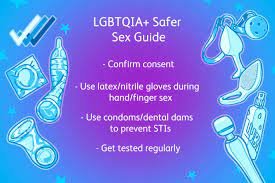
It’s your responsibility to communicate your STI status to your potential partners, and it’s your right to request their status, too. Discussing and respecting each other’s boundaries and protocols for safer sex is foundational for consent. This might mean using condoms, dams, gloves, or other barriers. It might also mean negotiating the kinds of contact you have with other partners and their STI status if you want to forego barriers. 

Be explicit about your boundaries. Different people can have very different practices. Condoms for penis-in-vagina, but no barriers for oral sex? Barriers for everything below the waist, but mouth kissing is fine? No barriers with one partner, but barriers with others? There are so many possible configurations! None of them are more “right” than another, but they do carry different levels of risk. Educate yourself on the risks and make the decisions that are right for you.

What if your partner’s safer sex practices are different from yours? Honoring consent means honoring the practices of the partner who is most risk-averse without guilt tripping or shaming. If that’s not for you, be honest about that, too. Maybe your risk profiles aren’t compatible, but at least you can maintain trust and integrity with each other and the community.

Remember to have these conversations before beginning play. Once the action has started, it’s hard to slow down to consider the finer points of getting and giving informed consent. For instance, this can happen in pick up play where you are seeking a certain experience, and you’re not focused on building a relationship. It’s easy to just go with the flow and see where things lead, consenting moment-to-moment as the action progresses, but you’re missing the “informed” part of consent when you don’t discuss STIs and safer sex first.

Safer sex practices are especially important for consensually non-monogamous folx, as we are honoring relationship agreements that serve our partners and our partners’ partners (and so on and so on…). We’re excited to have a guest speaker about STIs and safer sex at the online More Amoré Discussion Group on February 12! Register now to join us and learn more about taking care of your sexy self and your partners while reducing the awkwardness of having “the talk.”